

テクノロジー
家庭内の空きPCへAI推論を分配させる「NVIDIA PAIR」が公開:モデル配置と通信保護から見る導入の条件
家庭内の複数PCをAI推論に活用するNVIDIA PAIRが登場した。公開コードと公式文書を基に、速くなる処理の条件、モデル配置の制約、推論通信と機器情報で異なる保護範囲を読み解く。

Ollamaは、ユーザーが自身のコンピュータ上で大規模言語モデル(LLM)を簡単に実行できるように設計されたオープンソースのソフトウェアプラットフォームだ。これは、AIモデルの利用をクラウドサービスに依存せず、ローカル環境で完結させたいというニーズに応える。特に、プライバシーやデータセキュリティを重視する個人開発者や企業にとって有用なツールである。Ollamaプロジェクトは、AIモデルの民主化とアクセシビリティ向上を目指し、活発なコミュニティによって開発が進められている。
Ollamaの主要な特徴は、多様なLLMを統一されたインターフェースで管理・実行できる点だ。Llama 2やMistral、Gemmaといった人気のモデルを、コマンドラインインターフェース(CLI)やAPIを通じて簡単にダウンロードし、起動できる。これにより、開発者はローカル環境でAIアプリケーションのプロトタイプ作成やテストを効率的に行える。また、GPUアクセラレーションにも対応しており、対応ハードウェアを持つユーザーは高速な推論性能を享受できる。
ローカルLLM実行ツールとしては、LM StudioやJanといった競合も存在するが、Ollamaは特にそのシンプルさと使いやすさで評価が高い。Dockerコンテナのような手軽さでモデルを管理できるため、AIモデルの導入障壁を大幅に下げる。近年、エッジAIやプライベートAIの需要が高まる中で、Ollamaのようなローカル実行ツールはますます重要性を増している。企業内での機密データを扱うAIアシスタントや、オフライン環境でのAI利用など、幅広いユースケースでの採用が期待される。
家庭内の複数PCをAI推論に活用するNVIDIA PAIRが登場した。公開コードと公式文書を基に、速くなる処理の条件、モデル配置の制約、推論通信と機器情報で異なる保護範囲を読み解く。
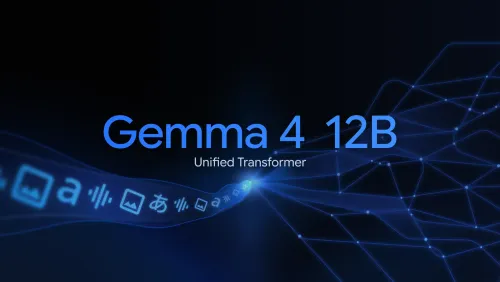
Googleは、中規模のオープンモデル「Gemma 4 12B Unified」を公開した。単一のデコーダーのみで音声・画像・テキストを直接処理する設計が特徴であり、16GB程度のメモリを持つPCで高度なマルチモーダルエージェントを構築できる。

Googleは、Gemma 4の推論を最大3倍高速化するMulti-Token Prediction対応ドラフトモデルを公開した。このモデルは、投機的デコード技術によりトークン生成と検証を分離し、VRAM帯域幅のボトルネックを解消することで、エッジデバイスやローカルPCでの推論品質を低下させることなく大幅に改善する。

ローカルAIの実験環境を自宅に置きたい開発者にとって、Mac miniの最安構成が94,800円から124,800円へ上がったことは何を意味するのか。2026年5月1日、Appleの販売ラインからM4/256GB構成が消え、512GB構成が入口になった。同時期にMac miniとMac Studioは、AI(人工知能)エージェント用途の需要増で供給制約を受けている。これは小型Macが安価な入門機から、常時稼働するローカルAIサーバーへ役割を変え、購入計画の基準価格が一段上がったことを示す変化だ。

Wizのレポート「State of AI in the Cloud 2026」は、組織が認識しないままサードパーティ製ソフトウェア経由でAIコンポーネントが導入され、シャドーAIが蔓延している現状を指摘している。MCPサーバーの普及やAIエージェントの動的な振る舞いは新たな攻撃面を生み出し、従来のセキュリティ管理モデルでは対応が困難であるため、AIが何を使っているかを把握する可視性の確保が急務である。

Googleは同社の軽量言語モデルファミリー「Gemma」の最新ラインナップとして、「FunctionGemma」をリリースした。 パラメータ数わずか2億7000万(270M)という、現代のLLM(大規模言語モデル)の基 […]

サイバーセキュリティの世界が、新たな時代の幕開けを告げる衝撃に揺れている。スロバキアのセキュリティ企業ESETの研究者が、史上初となる「AI駆動型ランサムウェア」のプロトタイプを発見したと発表したのだ。その名は「Prom […]

サンフランシスコの新興企業Deep Cogitoが、ステルスモードを解除し、高性能なオープンソースAIモデル群「Cogito v1」を発表した。独自のIDA訓練手法とハイブリッド推論機能を備え、既存のLlamaやDeep […]
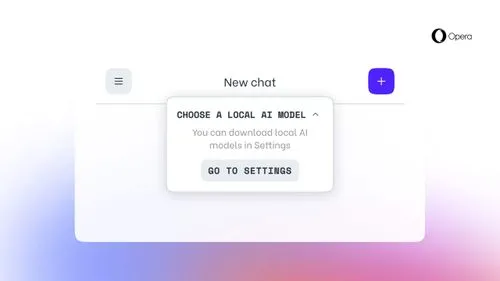
WebブラウザのOperaは、大規模言語モデル(LLM)をローカルにダウンロードして使用できる新機能の追加を発表した。まずはテスト段階での導入のようで、デベロッパー・ストリーム・アップデートを受信しているOpera On […]
With the growing demand for offline PDF chatbots in automotive industrial production environments, optimizing the deployment of large language models (LLMs) in local, low-performance settings has become increasingly important. This study focuses on enhancing Retrieval-Augmented Generation (RAG) techniques for processing complex automotive industry documents using locally deployed Ollama models. Based on the Langchain framework, we propose a multi-dimensional optimization approach for Ollama's local RAG implementation. Our method addresses key challenges in automotive document processing, including multi-column layouts and technical specifications. We introduce improvements in PDF processing, retrieval mechanisms, and context compression, tailored to the unique characteristics of automotive industry documents. Additionally, we design custom classes supporting embedding pipelines and an agent supporting self-RAG based on LangGraph best practices. To evaluate our approach, we constructed a proprietary dataset comprising typical automotive industry documents, including technical reports and corporate regulations. We compared our optimized RAG model and self-RAG agent against a naive RAG baseline across three datasets: our automotive industry dataset, QReCC, and CoQA. Results demonstrate significant improvements in context precision, context recall, answer relevancy, and faithfulness, with particularly notable performance on the automotive industry dataset. Our optimization scheme provides an effective solution for deploying local RAG systems in the automotive sector, addressing the specific needs of PDF chatbots in industrial production environments. This research has important implications for advancing information processing and intelligent production in the automotive industry.
To support data-driven decision-making in a Manufacturing Execution System (MES) environment, a system that can quickly and accurately analyze a wide range of production, quality, asset, and material information must be deployed. However, existing MES data management approaches rely on predefined queries or report templates that lack flexibility and limit real-time decision support. In this paper, we proposes a domain-specific Retrieval-Augmented Generation (RAG) architecture that extends LangChain’s capabilities with Manufacturing Execution System (MES)-specific components and the Ollama-based Local Large Language Model (LLM). The proposed architecture addresses unique MES requirements including real-time sensor data processing, complex manufacturing workflows, and domain-specific knowledge integration. It implements a three-layer structure: an application layer using FastAPI for high-performance asynchronous processing, an LLM layer for natural language understanding, and a data storage layer combining MariaDB, Redis, and Weaviate for efficient data management. The system effectively handles MES-specific challenges such as schema relationships, temporal data processing, and security concerns without exposing sensitive factory data. This is an industry-specific, customized approach focusing on problem-solving in manufacturing sites, going beyond simple text-based RAG. The proposed architecture considers the specificity of data sources, real-time and high-availability requirements, the reflection of domain knowledge and workflows, compliance with security and quality control regulations, and direct interoperability with MES systems. The architecture can be further enhanced through integration with various manufacturing systems, an advanced LLM, and distributed processing frameworks while maintaining its core focus on MES domain specialization.
Energy efficiency is a critical consideration in deploying large language models (LLMs) due to their significant environmental footprint. This study addresses this challenge by leveraging Ollama, an open-source framework that facilitates efficient local deployment of LLMs, thereby reducing energy consumption alongside enhancing privacy and accessibility. We evaluate the performance and efficiency of open-source LLMs from the Qwen2.5 and Llama3 families (0.5B–90B parameters) across diverse hardware platforms, including consumer-grade devices. Our evaluation spans high-end systems (RTX A6000, RTX 4090), consumer laptops like Apple M3/M4, and accessible platforms like NVIDIA Jetson AGX Orin, showcasing pathways to widespread AI adoption. Key findings include: (1) Ollama’s quantization enables efficient LLM deployment on consumer hardware while preserving performance; (2) Windows Subsystem for Linux enhances speeds across all models, delivering up to 21× improvements for the smallest model while also improving energy efficiency, thereby broadening adoption on common computing platforms; (3) Medium-sized models (7B–32B) achieve an ideal balance of performance and efficiency; (4) Larger models achieve the highest performance and exhibit better cross-platform consistency but are significantly less energy efficient. These results highlight strategies for inclusive, privacy-preserving, and sustainable AI deployment, advancing the democratization of LLM technology while reducing energy consumption and infrastructure demands.
We present a systematic, empirical evaluation of five local large language model (LLM) runtimes on Apple Silicon: MLX, MLC-LLM, llama.cpp, Ollama, and PyTorch MPS. Experiments were conducted on a Mac Studio equipped with an M2 Ultra processor and 192 GB of unified memory. Using the Qwen-2.5 model family across prompts ranging from a few hundred to 100,000 tokens, we measure time-to-first-token (TTFT), steady-state throughput, latency percentiles, long-context behavior (key-value and prompt caching), quantization support, streaming performance, batching and concurrency behavior, and deployment complexity. Under our settings, MLX achieves the highest sustained generation throughput, while MLC-LLM delivers consistently lower TTFT for moderate prompt sizes and offers stronger out-of-the-box inference features. llama.cpp is highly efficient for lightweight single-stream use, Ollama emphasizes developer ergonomics but lags in throughput and TTFT, and PyTorch MPS remains limited by memory constraints on large models and long contexts. All frameworks execute fully on-device with no telemetry, ensuring strong privacy guarantees. We release scripts, logs, and plots to reproduce all results. Our analysis clarifies the design trade-offs in Apple-centric LLM deployments and provides evidence-based recommendations for interactive and long-context processing. Although Apple Silicon inference frameworks still trail NVIDIA GPU-based systems such as vLLM in absolute performance, they are rapidly maturing into viable, production-grade solutions for private, on-device LLM inference.