

テクノロジー
ZLUDAがAMD Radeonで疑似PhysXに成功、Mafia IIで3倍高速化
有志開発のCUDA互換レイヤーZLUDAがv6でNVIDIA専用のPhysX物理演算をAMD Radeonで動作させた。Mafia IIで実測3倍高速化も、pre-alpha段階で公式サポートではない。

Ryzen 9 9950X3Dは、AMDが開発した高性能デスクトッププロセッサである。同社のRyzen 9シリーズの最上位モデルとして位置づけられ、特にゲーミングやクリエイティブワークロード向けに設計されている。この製品は、AMDのZen 5アーキテクチャをベースに、3D V-Cacheテクノロジーを統合することで、従来のプロセッサと比較して大幅な性能向上を実現した。高度なマルチスレッド性能とシングルスレッド性能を両立させ、幅広いユーザー層の要求に応える。デスクトップPC市場におけるAMDの主要な戦略製品の一つである。
Ryzen 9 9950X3Dの最大の特徴は、単一のCPUコアダイ(CCD)上に大容量の3D V-Cacheを積層している点にある。この技術により、ゲームや特定のアプリケーションで必要とされるデータへのアクセス速度が劇的に向上し、フレームレートの安定性や処理効率が高まる。具体的には、16コア32スレッド構成を持ち、高いクロック周波数で動作することで、要求の厳しい最新ゲームタイトルや、動画編集、3Dレンダリングなどのプロフェッショナルな作業において優れたパフォーマンスを発揮する。主なターゲットユーザーは、最高のゲーミング体験を求めるエンスージアストゲーマーや、高性能なワークステーションを必要とするコンテンツクリエイターである。AM5プラットフォームに対応し、DDR5メモリやPCIe Gen5といった最新のインターフェースを利用できる。
Ryzen 9 9950X3Dは、競合他社のハイエンドプロセッサ、特にIntelのCore i9シリーズと直接競合する。3D V-Cacheの採用は、特定のワークロード、特にキャッシュに敏感なゲームにおいて、競合製品に対する明確な優位性をもたらす。AMDは、このX3Dシリーズを通じて、ゲーミング性能で市場をリードする戦略を継続している。最新世代のプロセッサは、電力効率の改善とAI処理能力の強化にも注力しており、Ryzen 9 9950X3Dもこれらのトレンドを一部取り入れている。高性能PCビルドやカスタムゲーミングPCの分野で広く採用され、その性能が評価されている。
有志開発のCUDA互換レイヤーZLUDAがv6でNVIDIA専用のPhysX物理演算をAMD Radeonで動作させた。Mafia IIで実測3倍高速化も、pre-alpha段階で公式サポートではない。

組み込みデータベースの性能改善は、普通なら数%ずつ積み上げる地道な作業になる。ところがRust製OSSデータベースredbの4.1.0では、書き込み性能が一部ベンチマークで約1.5倍に伸びたうえ、savepoint復元やテーブル操作に潜んでいた破損リスクまでまとめて修正された。しかもリリースノートは、その多数のバグ修正をAIコーディングエージェントが見つけたと明記している。高速化だけでも珍しいのに、直した場所がデータベースの深部だった点がさらに重要だ。redb 4.1.0は、AIがOSSで何を担い始めたのかを具体的な数字で示した。

Appleが最新のMacBook ProおよびiPad Proに搭載した新SoC「M5」のGeekbench 6ベンチマーク結果が公開され、その詳細な性能が明らかになった。結果は、シングルコア性能でApple Silic […]
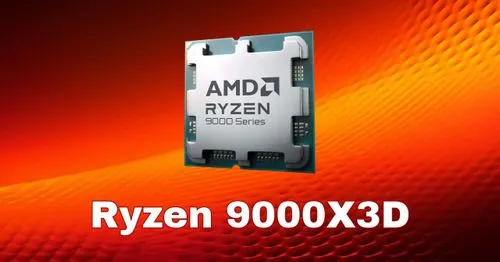
AMDが2025年1月後半、ハイエンドゲーミングプロセッサーの新製品として、16コア32スレッドの「Ryzen 9 9950X3D」と12コア24スレッドの「Ryzen 9 9900X3D」を発売する見込みであることが、 […]
AMDの3D V-Cache搭載プロセッサ「X3D」シリーズは、特にゲーミング用途において比類なきパフォーマンスを発揮する。AMDが先日「Zen 5」コアアーキテクチャを採用したRyzen 9000シリーズプロセッサを発 […]
As computing power advances, the environmental cost of semiconductor manufacturing and operation has become a critical concern. However, current sustainability metrics fail to quantify carbon emissions at the transistor level, the fundamental building block of modern processors. This paper introduces a Carbon Per Transistor (CPT) formula -- a novel approach and green implementation metric to measuring the CO$_2$ footprint of semiconductor chips from fabrication to end-of-life. By integrating emissions from silicon crystal growth, wafer production, chip manufacturing, and operational power dissipation, the CPT formula provides a scientifically rigorous benchmark for evaluating the sustainability of computing hardware. Using real-world data from Intel Core i9-13900K, AMD Ryzen 9 7950X, and Apple M1/M2/M3 processors, we reveal a startling insight-manufacturing emissions dominate, contributing 60-125 kg CO$_2$ per CPU, far exceeding operational emissions over a typical device lifespan. Notably, Apple's high-transistor-count M-series chips, despite their energy efficiency, exhibit a significantly larger carbon footprint than traditional processors due to extensive fabrication impact. This research establishes a critical reference point for green computing initiatives, enabling industry leaders and researchers to make data-driven decisions in reducing semiconductor-related emissions and get correct estimates for the green factor of the information technology process. The proposed formula paves the way for carbon-aware chip design, regulatory standards, and future innovations in sustainable computing.
Hyperdimensional computing (HDC) suits memory, energy, and reliability-constrained systems, yet the standard "one prototype per class" design requires ${\mathcal{O}}(CD)$ memory (with C classes and dimensionality D). Prior compaction reduces D (feature axis), improving storage/compute but weakening robustness. We introduce LogHD, a logarithmic class-axis reduction that replaces the C per-class prototypes with n≈⌈logk C⌉ bundle hypervectors (alphabet size k) and decodes in an n-dimensional activation space, cutting memory to ${\mathcal{O}}\left({D{{\log }_k}C}\right)$ while preserving D. LogHD uses a capacity-aware codebook and profile-based decoding, and composes with feature-axis sparsification. Across datasets and injected bit flips, LogHD attains competitive accuracy with smaller models and higher resilience at matched memory. Under equal memory, it sustains target accuracy at roughly 2.5–3.0× higher bit-flip rates than feature-axis compression; an ASIC instantiation delivers 498× energy efficiency and 62.6× speedup over an AMD Ryzen 9 9950X and 24.3×/6.58× over an NVIDIA RTX 4090, and is 4.06× more energy-efficient and 2.19× faster than a feature-axis HDC ASIC baseline.
The JPEG image compression algorithm consists of multiple sub-functions that are generally easy to parallelize except for the Huffman decoder, which is fundamentally serial and thus is a throughput bottleneck in high-speed designs. Fine-grain many-core processor arrays have delivered highlyefficient computing for a variety of multimedia and embedded applications and are therefore promising platforms for JPEG decoding. Two C++ many-core Huffman decoder implementations that utilize fine-grain task-level parallelism are developed and measured executing on the 32 nm KiloCore chip. Results are compared with three commercial chips: the AMD Ryzen 9 5900x, Intel i5-12600k, and Intel i7-1165G7. All processors are measured decoding 25 4K-resolution images compressed using baseline Huffman tables. The many-core implementations achieve a scaled throughput per chip area that is $80 \times, 51 \times$, and $82 \times$ greater, and a scaled energy efficiency (codewords per unit energy) $426 \times$, $959 \times$, and $1056 \times$ greater than the Intel 1165G7, Intel 12600k, and AMD 5900x, respectively. Combining energy, throughput, and area metrics, the many-core implementations achieve $9330 \times$, $\mathbf{1 3 6 0 0} \times$, and $\mathbf{2 3 5 0 0} \times$, lower energy-delay product normalized to area, compared to the Intel 1165G7, Intel 12600k, and AMD 5900x, respectively.
This paper presents a performance study of the Farneback algorithm for optical flow tracking in video and images. With the growing need for efficient video processing technologies, optical flow analysis plays a critical role in fields such as sports, medicine, gaming, and smart home systems. The study compares the performance of the Farneback algorithm on different computing architectures, specifically focusing on a CPU (AMD Ryzen 9 4900H) and a GPU (nVidia GeForce GTX 1660 Ti). The results demonstrate that GPU-based parallel computing significantly enhances the speed and efficiency of the algorithm, achieving speed improvements of up to 8.791 times compared to CPU processing, particularly in real-time applications with varying video complexities. For example, videos processed with a static camera and a small number of moving objects showed a frame rate increase from 0.953 frames per second on CPU to 7.431 frames per second on GPU. The study provides insights into the practical implications of using GPUs for optical flow analysis, emphasizing their superiority in processing high-complexity video data compared to traditional CPU-based systems. These findings are crucial for developing more responsive and energy-efficient systems in real-world applications. Future research will explore broader hardware configurations and further optimization of optical flow algorithms to enhance their applicability in diverse scenarios.