
Science

56 results for “space”

Alphabet posted its first-ever free cash flow deficit ($5.855 billion) since going public, in the Q2 earnings reported on July 22, 2026. This piece breaks down how 69% of its $112.1 billion net income came from the after-tax impact of $99 billion in unrealized gains on stakes in SpaceX and an unnamed private company, and how $44.9 billion in capital expenditures outpaced the company's actual earning power.

A critical interpretive blind spot has been discovered in the experimental scenario for "gravitationally induced entanglement," long regarded as decisive evidence for quantum gravity theory. An international research team centered at Kyushu University has mathematically proven that a quantum superposition of the gravitational field can be equivalently re-described—via a change of coordinate system—as a phenomenon of particles moving through a "classical gravitational field," fundamentally redefining the standard for such evidence.

A Korean game contest caps the post-extraction package—including the executable and required runtime—at 1,474,560 bytes. Examining the gap between raw physical capacity and typical DOS-usable space reveals where engine selection meets the boundaries of the execution environment.
BQP will develop orbital object classification AI under its first SpaceWERX contract. We examine the claimed 7,000x model compression, the undisclosed evaluation conditions, and how far the technology is from space-based demonstration.
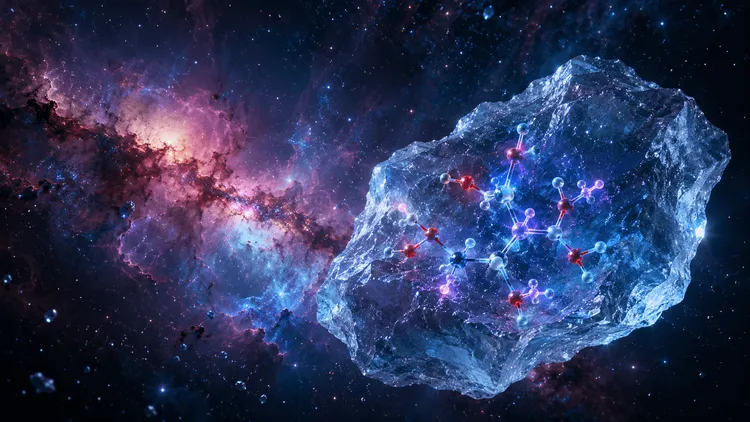
A four-carbon sugar called erythrulose, tied to the blueprint of life, has been detected for the first time ever in a molecular cloud at the center of our galaxy. This overturns the conventional theory of carbon atoms being added one at a time, instead supporting a new synthesis pathway in space where two-carbon molecules bond together and grow all at once.
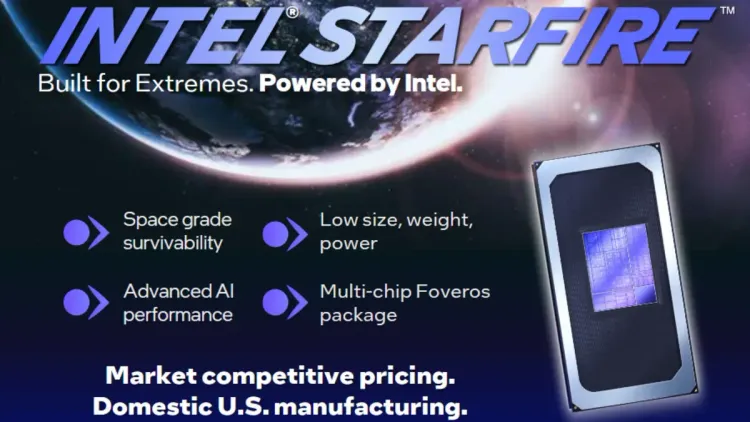
Intel's space-oriented SoC "Starfire" targets up to 75 TOPS using 18A and Foveros, but radiation tolerance figures and spaceflight qualification remain undetermined. Judging its real capability will have to wait for Q3 2026 samples and test results.
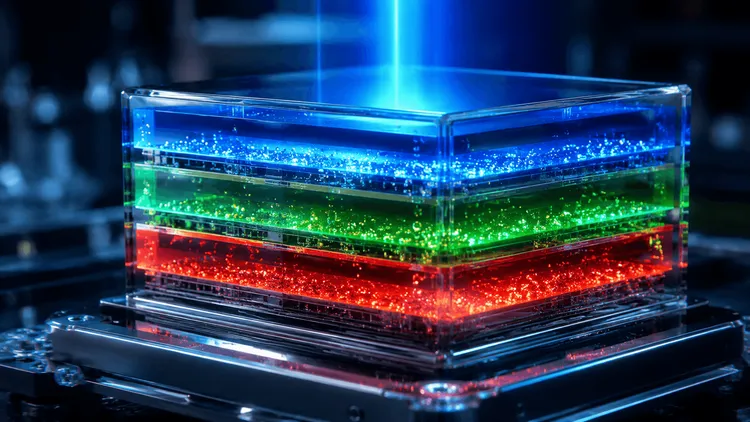
A Swiss research team has achieved a power conversion efficiency of 30.02% with a triple-junction solar cell stacking silicon and perovskite, breaking through the theoretical limit of a single material. The fusion of low-cost materials and nanotechnology is paving the way to bring ultra-high-efficiency power generation—once confined to space exploration—down to Earth.
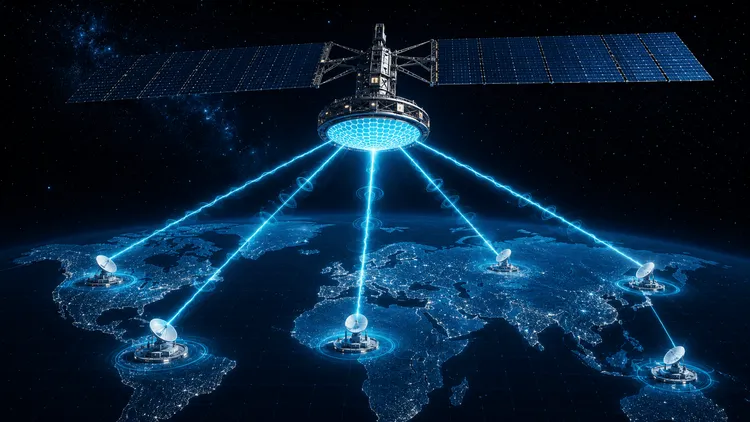
Three U.S. startups have successively revealed commercial contracts and demonstration plans for space-based solar power, while NASA's independent estimates swing by roughly 20-fold depending on assumptions. The industry's targets align almost exactly with the best-case scenario in those estimates, leaving feasibility hinging on verification of launch costs and power-transmission efficiency.
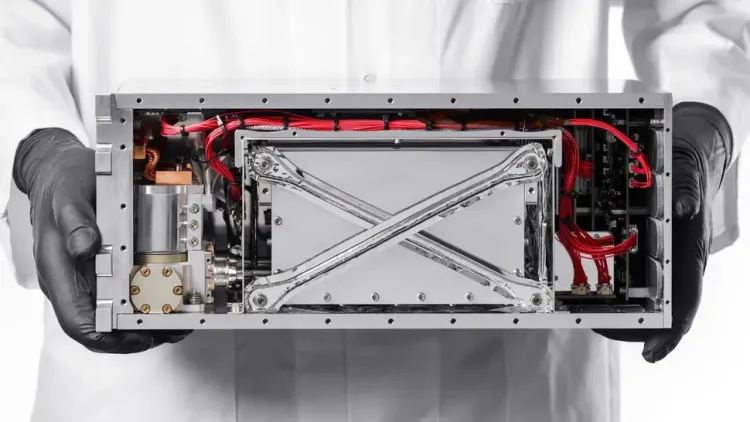
New Zealand's Zenno has successfully completed the world's first on-orbit demonstration of a magnetic actuator using superconducting magnets. The device generates torque by interacting with Earth's magnetic field while maintaining extremely low temperatures, positioning it as a next-generation technology for satellite attitude control and momentum management without consuming fuel.