

テクノロジー
MicrosoftのASDがXbox PCアプリで一般提供へ、AMD RDNA全世代でシェーダー待ち短縮
Microsoftは、PCゲームのロード時間を劇的に短縮する機能「ASD」をXbox PCアプリで一般提供し、AMDの全RDNA世代に対応させた。事前コンパイル済みシェーダーを配信することで、初回起動時の待ち時間やプレイ中のカクつきを解消する。

別名: ROG Ally
ROG Allyは、ASUSのゲーミングブランドROG(Republic of Gamers)が展開するWindows搭載の携帯型ゲーミングPCシリーズである。AMD製APUを採用し、据置機向けの大作タイトルを含むPCゲームを手のひらサイズの筐体で動作させることを狙う。Valveの「Steam Deck」を筆頭とする携帯ゲーミングPC市場の拡大とともに存在感を強めている。
ROG Allyは従来のノートPCや家庭用ゲーム機とは異なり、Windows環境をそのまま携帯機に持ち込むことで、Steamに限らずEpic Games StoreやXbox PCアプリなど複数のゲーム配信プラットフォームを一台で扱える点を特徴とする。一方でWindowsベースであることは起動時間やUIの最適化面での課題ともなっており、SteamOSを採用するSteam Deckとの比較がしばしば話題になる。
携帯ゲーミングPC市場では、AMDのRDNAアーキテクチャを採用するGPUが主流であり、ROG AllyもこのAMD系APUを搭載する代表的な製品の一つに位置づけられる。AMDは2026年5月14日、AI超解像技術FSR 4.1を旧世代のRDNA 3およびRDNA 2搭載GPUにも提供すると発表しており、RDNA 3世代には2026年7月、RDNA 2世代には2027年初頭に対応が予定されている。こうした技術の広範な世代対応は、ROG Allyのような携帯機においても画質と省電力のバランスを改善する要素となる。またMicrosoftは2026年6月13日、PCゲームのロード時間短縮機能ASDをXbox PCアプリで一般提供し、AMDの全RDNA世代に対応させた。事前コンパイル済みシェーダーの配信により初回起動時の待ち時間やプレイ中のカクつきを解消するもので、Windows搭載のROG Allyのようなハードウェアでも効果が期待される。
2026年5月6日には、SteamOS非対応の携帯ゲーミングPC向けに実質的なSteamOS代替として支持を集めるLinuxディストリビューションBazziteが大型アップデートを公開し、SBOMや署名ISOの実装といったセキュリティ・運用面の強化を行った。こうした動きは、ROG AllyのようなWindows搭載機においてもLinuxベースの代替OSを選択する余地があることを示している。同時期の2026年5月6日および6月26日には、競合するValveのSteam DeckのLCDモデルの生産終了が報じられ、携帯ゲーミングPC市場における最安モデルの廃止が実質的な値上げとして受け止められた。これは市場全体の価格帯や製品ラインアップの見直しを促す動きであり、ROG Allyを含む各社の携帯機戦略にも影響を与えると見られる。さらに、ASUSのROGブランドは2026年のCESにおいて、XREALと共同開発した240Hz Micro-OLED搭載のARグラスROG XREAL R1を発表しており、携帯ゲーミングPCと組み合わせる周辺機器としての展開も進めている。これらの動向は、ROG AllyがハードウェアそのものだけでなくOSやシェーダー配信技術、周辺機器を含む広範なエコシステムの中で位置づけられていることを示している。
Microsoftは、PCゲームのロード時間を劇的に短縮する機能「ASD」をXbox PCアプリで一般提供し、AMDの全RDNA世代に対応させた。事前コンパイル済みシェーダーを配信することで、初回起動時の待ち時間やプレイ中のカクつきを解消する。

AMDは、AI超解像技術FSR 4.1をRDNA 3およびRDNA 2世代のRadeon GPUに提供すると発表した。RDNA 3搭載のRX 7000シリーズには2026年7月、RDNA 2搭載のRX 6000シリーズやSteam Deckには2027年初頭に対応予定で、専用AIハードウェア非搭載の旧世代機向けにINT8処理で最適化されている。

SteamOS非対応の携帯ゲーミングPCやデスクトップ向けに「実質的なSteamOS代替」として支持を集めるBazziteが、2026年4月10日にTestingブランチ向けの大型アップデートを公開した。カーネル更新やM […]

2026年1月6日、Intelは同社の命運を握ると言っても過言ではない次世代モバイルプロセッサ、Core Ultra Series 3(開発コードネーム:Panther Lake)を正式に発表した。 この発表が単なる年次 […]

2026年1月5日、ラスベガスで開催されているCES 2026において、フラッシュストレージの巨人SanDisk(サンディスク)が歴史的なブランド刷新を発表した。長年、自作PCユーザーやゲーマー、クリエイターに愛されてき […]

2026年のCES(コンシューマー・エレクトロニクス・ショー)において、ASUSのゲーミングブランドROG(Republic of Gamers)が、ARグラス市場のパイオニアであるXREALとタッグを組み、衝撃的な製品 […]

Valve社は、ポータブルゲーミングPC市場の民主化を牽引してきた立役者である「Steam Deck LCD 256GBモデル」の生産終了を海外向けに告知した。日本国内では正式な告知はないが、公式ストアでは売り切れとなり […]

Valve社は、ポータブルゲーミングPC市場の民主化を牽引してきた立役者である「Steam Deck LCD 256GBモデル」の生産終了を海外向けに告知した。日本国内では正式な告知はないが、公式ストアでは売り切れとなり […]

2025年のPCゲーミング業界は、こと“Linux”においては、かつてない躍進が見られている事は間違いない。 そして今回、Fedoraをベースとしたゲーミング特化型Linuxディストリビューション「Bazzite」の開発 […]

Microsoftは、AIアシスタント「Copilot」に一連の大型アップデートを発表した。音声でPCを操作する「Hey, Copilot」の正式導入、Google DriveやGmailとの連携、そしてAIが自律的にP […]

GPDは、革新的なハンドヘルドゲーミングPC「GPD WIN 5」を正式発表した。本機はAMDの最新かつ最強のAPUであるRyzen AI Max+ 395「Strix Halo」を搭載し、ポータブルゲーミングPCの範疇 […]

スマートフォンOSのバッテリー管理と比較すると遅れが否めなかったWindowsのバッテリー管理に、ついに大きな進化が訪れそうだ。 Microsoftが現在、Windows 11の実験的バージョン(Canaryチャネル)で […]

Qualcommは、ポータブルゲーム機向けに特化したSoC「Snapdragon Gシリーズ」の2025年ラインナップを発表した。新製品は、G3 Gen 3、G2 Gen 2、G1 Gen 2の3モデルで構成され、それぞ […]

Valveは、Linux系OSであるSteamOS 3のサードパーティー製ハードウェアへの展開を加速させるため、新たなブランドガイドラインを公開した。「Powered by SteamOS」ロゴの使用基準を明確化し、パー […]

PlayStation 4エミュレータ「ShadPS4」の開発が急速に進んでおり、既に一部のゲームがプレイ可能になりつつあるようだ。今回、人気タイトル『Dark Souls Remastered』のローディングに成功した […]

Valve Steam Deckが開拓した新たな携帯型PCゲーム機市場は、近年Asus ROG AllyやLenovo Legion Goなど新規参入が相次ぎ活況を呈している。先日AsusがROG Ally Xの登場を予 […]
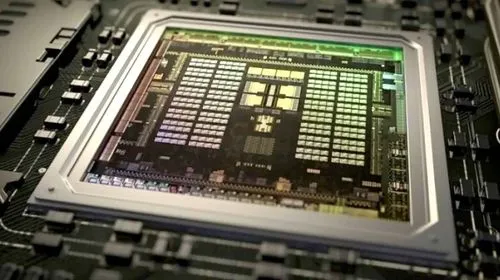
MediaTekとNVIDIAは、自動車分野での協業や、QualcommのSnapdragon Xチップに対抗するためWindows向けArmチップの製造で協力していることが伝えられているが、両社の協業はゲーム分野にも及 […]

ASUSは、同社のゲーミングデバイス向けブランドROGの公式YouTubeチャンネルにて、次期携帯ゲーム機「ROG Ally X」を今年後半に発売することを明らかにした。 動画の中で詳細なスペックは明らかにされず、次期ゲ […]
Robotic arm target grasping by vision support is a commonly used method in grasping tasks and is usually used for multi-target complex scenes. Where vision support is generally used to identify the targets and to get their positions, categories and sizes. Most robotic arm grasping tasks using target recognition methods as visual inspection ignore the relationship between target objects such as the occlusion problem between objects. This limits the targets to be grasped and makes the crawling task inefficient. We propose Grasping with Occlusion-Aware aLly (GOAL) method based on binocular stereo-vision. Firstly, occlusion relationships in the view are directly inferred and targets are segmented as well as localized. Subsequently, multi-target grasping pose estimation is performed to obtain effective grasping positions. Ultimately, validation is conducted on a high-resolution dataset using the EPSON robotic arm. Note to Practitioners—This research significantly advances the field by addressing occlusion challenges in robotic grasping, offering effective methods, a valuable dataset, and practical insights. The proposed Grasping with Occlusion-Aware aLly (GOAL) method was validated on a high-resolution dataset using the EPSON robotic arm, showcasing its applicability and efficiency in real-world scenarios. This work provides valuable contributions to practitioners in the field of robotic manipulation and grasping tasks.
Academic Abstract Advantaged group allies have multiple motives for supporting equality, raising questions about their sincerity. We draw upon the covariation model of attributions to explain how disadvantaged group members make attributions about whether advantaged group “allies” are sincerely motivated to empower the disadvantaged group. We propose an Attribution-Identity Model of Sincerity (AIMS) which posits that disadvantaged group members view advantaged group members as sincere allies when they support equality in the presence of inhibitory causes and in the absence of facilitative causes, exceed expectations for the advantaged group, and provide support across time and contexts. Furthermore, those who identify strongly with their disadvantaged group and perceive intergroup inequality as illegitimate are most motivated to ascertain the sincerity of advantaged group members’ allyship. AIMS suggests how members of disadvantaged groups seek to maximize benefits and minimize risks of advantaged group members’ allyship. Public Abstract Advantaged group members (e.g., men, White Americans) can act as allies for disadvantaged groups (e.g., women, Americans belonging to minoritized racial groups), but members of disadvantaged groups sometimes have reason to question whether their motives are sincere. We argue that members of disadvantaged groups view advantaged group allies as more sincere when they support equality when they do not stand to benefit from it and even when they stand to lose. We also argue that members of disadvantaged groups view advantaged group allies as more sincere when their support for equality goes beyond expectations for their advantaged group, consistently over time, and is not limited to particular situations, forms, or contexts. Members of disadvantaged groups like sincere allies, want to work with them, and feel safe around them. Sincere allies also serve as moral exemplars to other members of advantaged groups.
Robotic grasping is a crucial topic in robotics and computer vision, with broad applications in industrial production and intelligent manufacturing. Although some methods have begun addressing instance-level grasping, most remain limited to predefined instances and categories, lacking flexibility for open-vocabulary grasp prediction based on user-specified instructions. To address this, we propose RoG-SAM, a language-driven, instance-level grasp detection framework built on Segment Anything Model (SAM). RoG-SAM utilizes open-vocabulary prompts for object localization and grasp pose prediction, adapting SAM through transfer learning with encoder adapters and multi-head decoders to extend its segmentation capabilities to grasp pose estimation. Experimental results show that RoG-SAM achieves competitive performance on single-object datasets (Cornell and Jacquard) and cluttered datasets (GraspNet-1Billion and OCID), with instance-level accuracies of 91.2% and 90.1%, respectively, while using only 28.3% of SAM's trainable parameters. The effectiveness of RoG-SAM was also validated in real-world environments.
The sharing and documentation of cardiovascular research data are essential for efficient use and reuse of data, thereby aiding scientific transparency, accelerating the progress of cardiovascular research and healthcare, and contributing to the reproducibility of research results. However, challenges remain. This position paper, written on behalf of and approved by the German Cardiac Society and German Centre for Cardiovascular Research, summarizes our current understanding of the challenges in cardiovascular research data management (RDM). These challenges include lack of time, awareness, incentives, and funding for implementing effective RDM; lack of standardization in RDM processes; a need to better identify meaningful and actionable data among the increasing volume and complexity of data being acquired; and a lack of understanding of the legal aspects of data sharing. While several tools exist to increase the degree to which data are findable, accessible, interoperable, and reusable (FAIR), more work is needed to lower the threshold for effective RDM not just in cardiovascular research but in all biomedical research, with data sharing and reuse being factored in at every stage of the scientific process. A culture of open science with FAIR research data should be fostered through education and training of early-career and established research professionals. Ultimately, FAIR RDM requires permanent, long-term effort at all levels. If outcomes can be shown to be superior and to promote better (and better value) science, modern RDM will make a positive difference to cardiovascular science and practice. The full position paper is available in the supplementary materials.