
テクノロジー
OpenAIがSamsungと次世代チップ協力を深める、メモリ技術から見る両社の接点
OpenAIがSamsungとの次世代チップ協業の進展を明かした。HBM内部のロジック製造と演算チップ本体の受託製造を分け、公式発表から協力の接点と未公表の分担を読み解く。

別名: Taiwan Semiconductor Manufacturing Company, 台積電, 台湾積体電路製造, TSMC, 台湾積体電路製造股份有限公司
tsmc.com台湾積体電路製造(TSMC)は、1987年に台湾で設立された世界最大の純粋ファウンドリ企業である。自社ブランド製品を持たず、顧客のファブレス半導体企業から設計データを受け取り、チップを受託生産するビジネスモデルを確立した。Apple、NVIDIA、Qualcommなど主要ファブレス企業の製品を製造し、先端プロセスノードにおいて業界をリードする地位にある。
TSMCは半導体製造プロセスの微細化において長年にわたり最前線に立ち続けてきた。現在は2nmおよびそれ以降の世代に向けた研究開発を進めており、競合であるSamsung FoundryやIntel Foundry Servicesとの先端プロセス競争が激化している。パッケージング技術においてもCoWoS(Chip on Wafer on Substrate)がAIアクセラレータ向けの実装基盤として広く採用されており、高帯域幅メモリ(HBM)とのインテグレーションにおいても中心的な役割を担っている。製造基盤は台湾を主軸としつつ、日本や米国アリゾナ州へのファブ展開も進めている。
2026年6月には、パッケージング技術および製造プロセスの両面でTSMCに関連する複数の動きが報じられた。パッケージング分野では、TSMCが従来の円形ウエハーに代わり角型パネルを用いる新技術CoPoS(Chip on Panel on Substrate)の開発を加速していることが明らかになった。CoPoSはCoWoSをただちに置き換えるものではなく、AI向けの巨大パッケージ需要に対応するための別ルートと位置づけられており、材料利用率を高めてコストを抑える狙いがある。2028年頃の量産開始が目標とされ、将来的なガラス基板の採用も視野に入れている。
基板材料の面では、TSMCとIntelがともに有機ABF基板からガラス基板への置き換えを本格化させていることが報告された。Counterpoint Researchはガラス基板市場が2030年に80億ドル規模へ成長すると予測しており、配線密度が有機ABF比で5倍、熱変形が3分の1というガラスの物性がAI半導体パッケージングの主役交代を後押ししている。
先端プロセス競争では、Samsung Foundryが2nmで70%の歩留まりを達成しTeslaとの165億ドル契約を獲得したと報じられる一方、1.4nmの量産においてTSMCに約1年遅れるとの見方が示された。IntelについてはHBM量産で実績を持つLee Seok-hee氏がAdvanced Packaging担当EVPに就任し、EMIBを進化させたEMIB-TによってTSMCのCoWoS独占市場に挑む戦略が注目されている。また、IBMが発表したサブ1nmのナノスタック技術については、量産化まで5年程度かかる見通しが示されており、TSMCを含む製造各社との連携が今後の焦点となっている。
EUV露光装置を独占するASMLのCEOは、欧州のChips Act 2.0に対して「需要創出なき製造投資は他地域のための工場になる」と警告を発した。先端AI向けチップの購入の約80%を米国が占めるとされる状況のなか、TSMCが台湾・日本・米国と製造拠点を分散させる動きは、地政学的リスクへの対応としても各国政府や産業界から注目を集めている。
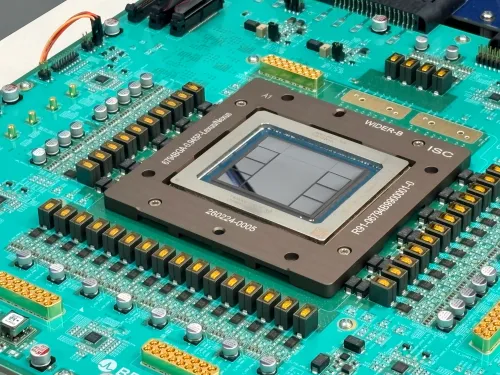
OpenAIがSamsungとの次世代チップ協業の進展を明かした。HBM内部のロジック製造と演算チップ本体の受託製造を分け、公式発表から協力の接点と未公表の分担を読み解く。
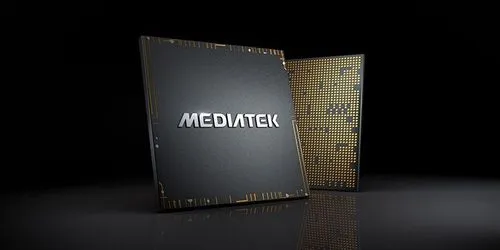
MediaTekが先端パッケージ人材の採用を広げている。公式求人と技術資料から、AI ASICを設計、量産、調達まで一体運用する狙いを読み解く。
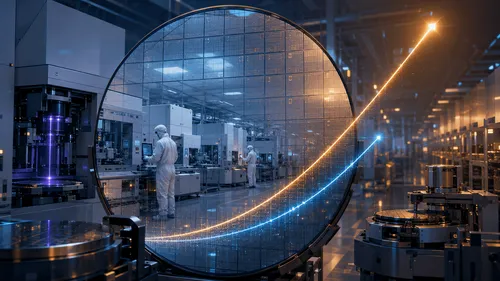
中国の7nm以下ウェハー供給不足率が2035年に34%へ縮む予測を、能力増強、歩留まり、輸出規制、技術世代の差から一次資料と周辺情報を用いて検証する。
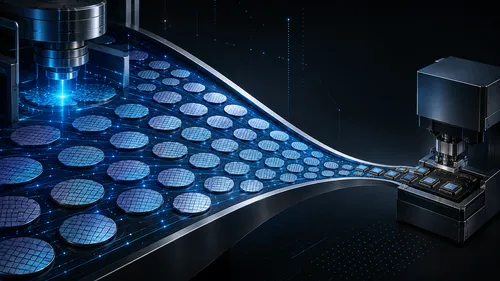
TSMCの先端パッケージング技術CoWoSは3年で月産能力が約9倍に拡大したが、需給ギャップはなお約10%残る。歩留まりの物理的な壁と、NVIDIAが容量の過半を確保する商流構造という二つの制約を、一次資料と複数の推計から読み解く。

テキサス大学とTSMCが300mmウェハー上に2ns・350fJで動作するSOT-MRAMを試作。実測データに基づくシミュレーションにより、素子間ばらつきの克服などエッジAI実用化に向けた具体的な課題が示された。

QualcommのHBCにSamsungとSK hynixが協力すると報じられた。演算をメモリ近傍へ移す設計の実力は、2027年半ばのAI250サンプルと第三者検証で試される。

NVIDIAが2026年に量産へ移したCPO(Co-Packaged Optics)は、光エンジンをスイッチASICに直接組み込み電力効率を5倍に高める技術だ。銅配線の物理限界とTSMCの製造プロセス、スケールアウトからスケールアップへ向かうロードマップを解説する。

理研などが2µm固体レーザーを用いたEUV光発生でマルチレーザー照射法を実証。スズ平板ターゲットにおいて同一総エネルギーで変換効率を2.6%から3.6%へ高めた。

AppleのM6は2nmと3種類のCPUコアで小型Macを更新し、M5 Ultraは4枚の3nm世代ダイと1.2TB/sのメモリ帯域で大規模処理を狙う。公称性能を過去世代と比べ、設計上の違いと注意点を整理した。
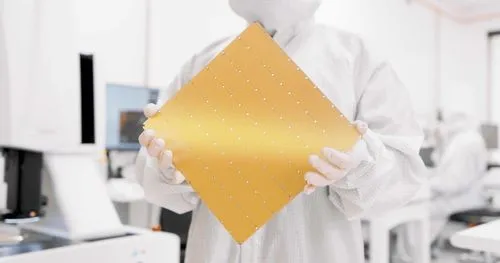
CerebrasのCS-4は、同じ5nmウェハーの電力・冷却・I/Oを再設計し、ウェハー当たりのピーク演算性能を2倍にした。性能主張の条件と量産性を検証する。
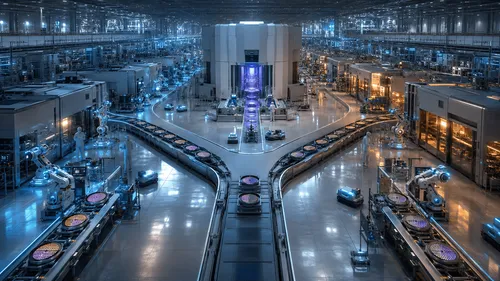
High-NA EUVの採用時期は、装置の解像度より良品ウェハー当たりの総費用と量産学習の価値で決まる。TSMC、Samsung、Intelの判断差を既存資産と工程削減の採算から読み解く。

SK hynixらがCPOの査読済み技術ロードマップを公表した。光接続を将来の共有メモリまで延ばす構想は、AI基盤の帯域設計をHBMの外側へ広げる。
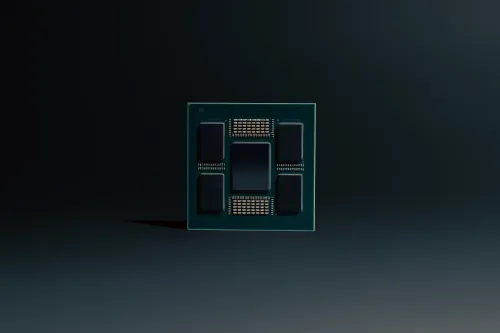
Waymoは第6世代Driverの車載計算を公開した。5nm ASICへセンサー融合を寄せ、CPUとGPUを併用する構成で、低遅延と故障時の処理継続を狙う。

玄鉄C950の64コア想定構成でQwen3.8-27Bを30 tokens/s以上で推論したとする資料を検証。性能を支えるSHL最適化と、未開示の測定条件、量産化までの距離を読み解く。
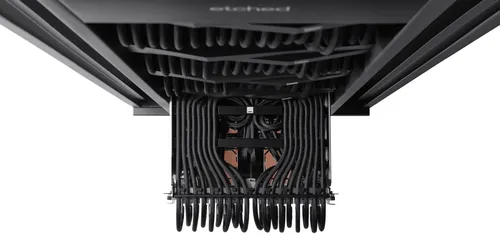
Etchedが7億ドルを調達し、評価額は210億ドルに到達。Jane Streetへ初の推論ラックを納入したが、性能比較と量産規模の開示はこれからだ。
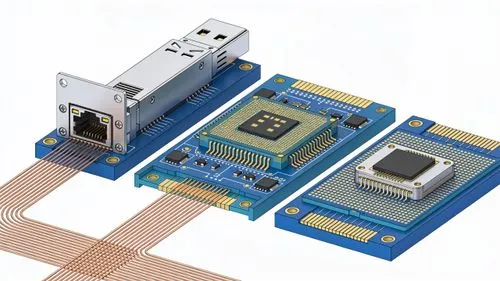
CPOの量産が2028年以降にずれ込む中、現場交換可能な光エンジンでDSP不要の電力効率を実現するNPOが、Broadcom、Alibaba、Tencentの製品投入とOpen CPX MSAの標準化を背景に、2020年代後半の光インターコネクト需要を担う現実的な選択肢として台頭している。

Appleが部品在庫を76.45億ドルまで積み増す一方、TSMCの在庫日数はN2立ち上げで87日に増えた。約10億ドルのApple向けチップ滞留報道を、両社の公式開示から切り分ける。
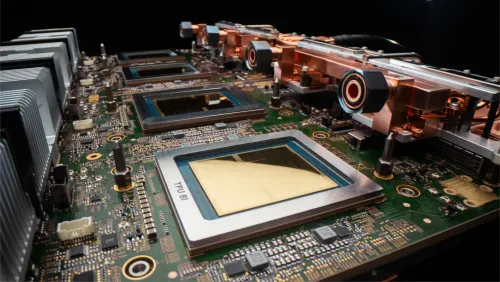
FubonはGoogleが2028年に最大1500万個のTPUを確保すると推定。未発表の第9世代とTSMC・Intelの供給分担を、公式開示と独自報道から検証する。

IntelはEMIB-Tの受注残拡大を受け、2027年の顧客量産を計画する。材料利用率の優位が実コストへ結び付くかは、超大型パッケージの歩留まり次第だ。

TSMCがIntelのEMIBに似た先端パッケージ技術をKinsusと開発中だと報じられた。CoWoS-Lとの差は、シリコンブリッジを組み込む層と量産工程にある。
Abstract This paper proposes a finite-time fault-tolerant trajectory tracking control for a quadrotor system against external disturbances, parametric uncertainties and actuator faults without the need of fault diagnosis mechanism. First, a finite-time fault-tolerant control based on a multivariable integral terminal sliding mode control (TSMC) is proposed to separately accommodate the parametric uncertainties and actuator faults. Then, combined with an adaptive law, an adaptive fault-tolerant control (AFTC) is employed to eliminate the requirement of the prior knowledge on the uncertainty bounds and achieve high-precision trajectory tracking in a finite time. Besides, a finite-time exact observer (FEO) is incorporated to estimate and compensate for the disturbances in a finite time while keeping the control gains of AFTC to small values. The promising features of the proposed fault-tolerant control scheme include finite-time convergence and insensitivity to multiple faults and disturbances. The finite-time stability of the closed-loop system is proved by Lyapunov theory. Finally, the effectiveness of the proposed method is validated through extensive numerical simulations for a variety of working scenarios.
Two of the world's largest foundries—Taiwan Semiconductor Manufacturing Co. (TSMC) and Samsung—announced in April that they'd climbed one more rung on the Moore's Law ladder. TSMC spoke first, saying its 5-nanometer manufacturing process is now in what's called “risk production”—the company believes it has finished the process, but initial customers are taking a chance that it will work for their designs. Samsung followed quickly with a similar announcement.
Abstract In the present paper, we report a robust and efficient terminal sliding mode controller based particle swarm optimization (PSOTSMC) for maximum power point tracking (MPPT) of photovoltaic (PV) system under variable atmospheric conditions. The PSO-TSMC controller combines the features of both terminal sliding mode control (TSMC) and particle swarm optimization (PSO) method. The proposed approach is designed based TSMC controller as robust nonlinear controller in order to make the PV system performs at the desired reference maximum power voltage (MPV) despite the atmospheric conditions variation, by regulating the control duty cycle. Moreover, the proposed approach applied TSMC controller with their optimal parameter by using PSO method. Furthermore, a comparative study, including the proposed PSO-TSMC controller, the standard TSMC and the conventional sliding mode control (SMC), is investigated under variable atmospheric conditions. Hence, simulation results reveal that the proposed approach assures more robustness against atmospheric conditions variation with best tracking performance and fast tracking response convergence in finite time compared to the other controllers (i.e. TSMC and SMC).
The identification of gas mixture speciation from a complex multicomponent absorption spectrum is a problem in gas sensing that can be addressed using machine-learning approaches. Here, we report on a deep convolutional neural network for multigas classification using terahertz (THz) absorption spectra, THz spectra mixture classifier network or TSMC-Net. TSMC-Net has been developed to identify eight volatile organic compounds in mixtures based on their fingerprint rotational absorption spectra in the 220-330 GHz frequency range. A data set consisting of simulated absorption spectra for randomly generated mixtures, with absorption greater than thresholds representing detectable limits and annotated with multiple labels, was prepared for model development. The supervised multilabel classification problem, i.e., the identification of individual gases in a mixture, is converted to a supervised multiclass classification problem via label powerset conversion. The trained model is validated and tested against simulated spectra for gas mixtures, with and without white Gaussian noise. The trained model exhibits high precision, recall, and accuracy for each pure compound. Class activation maps illustrate the complex decision-making process of the model and highlight relevant frequency regions that are needed to identify unique mixtures. Finally, the model was demonstrated against measured THz absorption spectra for pure species and mixtures, acquired using a microelectronics-based THz absorption spectrometer. The data set generation strategy and deep convolutional neural network approach are generalized and can be extrapolated to other spectroscopy types, frequency ranges, and sensors.